Fit & Assembly
Confirm interfaces, screw locations, clips, mating surfaces and product envelope.
Use machined plastic or metal parts to verify geometry, assembly, function and critical dimensions before committing to injection tooling or production.

CNC machining is most useful when the design needs functional evidence, engineering-grade materials or close dimensional review.
Confirm interfaces, screw locations, clips, mating surfaces and product envelope.
Test load, movement, sealing, mounting or other application-specific functions.
Measure important features before mold shrinkage and tooling variation are introduced.
Produce low-volume parts while design, tooling or market demand is still developing.
The best route depends on material, geometry, test purpose, volume and how close the sample must be to the final product.
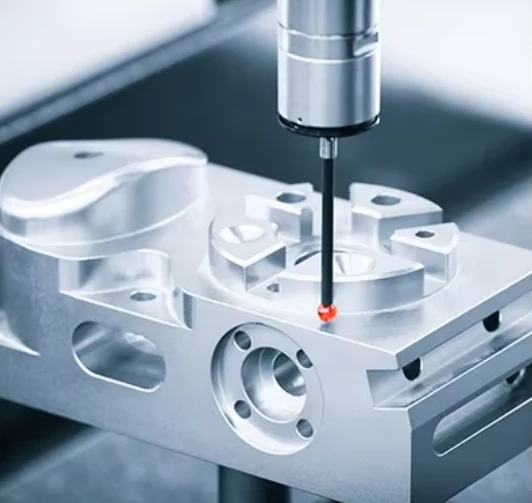
Machined-part pricing depends on geometry, material, tolerances, finish and inspection—not only part size.
3D CAD plus a 2D drawing for critical dimensions, threads, surface finish and datums.
Specify grade, color, anodizing, polishing or other required treatments.
Tell us whether parts are for testing, presentation, bridge supply or final use.
Tolerance capability depends on part size, geometry, material, feature accessibility and inspection method. Mark only function-critical dimensions tightly.
CNC can validate geometry and function, but molded parts may differ because of resin flow, shrinkage, gate marks, draft and texture.
Yes. Material availability and final selection are reviewed according to application, quantity and test purpose.
When the design, material direction, critical dimensions and expected volume are stable enough to define the mold.