Wall thickness
Uneven wall thickness can create sink marks, warpage, long cycle time and inconsistent shrinkage. We look for areas where the design can be balanced without losing function.
A practical checklist for buyers and engineers who want fewer mold changes, clearer quotations and smoother sample approval.
A good injection molding design review should connect part geometry, material behavior, mold structure, ejection, cooling and inspection requirements before the project becomes expensive to change.
This page turns common design-for-molding topics into a project-friendly checklist that can be used before requesting a quotation.
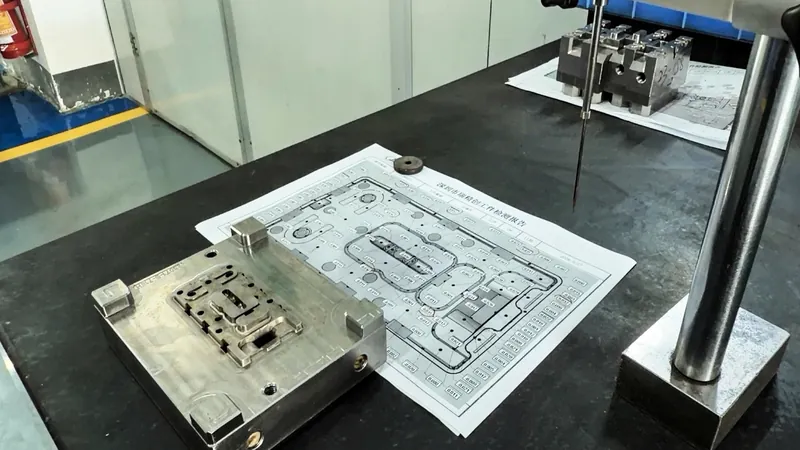
The goal is not to make the part more complicated. The goal is to avoid preventable sample delays, cosmetic defects and production instability.
Uneven wall thickness can create sink marks, warpage, long cycle time and inconsistent shrinkage. We look for areas where the design can be balanced without losing function.
Draft improves release from the mold and reduces drag marks. Cosmetic surfaces, ribs and deep walls usually need early discussion.
Ribs and screw bosses improve strength but can also create sink, weak weld lines or ejection risk if proportions are not reviewed.
Gate location affects filling, weld line position, appearance, pressure loss and part trimming. Visible surfaces need special attention.
Parting line, sliders and lifters affect mold cost, visible lines, maintenance and sample approval. Complex undercuts should be justified by function.
We review tolerance notes, inspection feasibility and which dimensions are truly critical to fit, sealing, assembly or product performance.
Wall thickness and draft are only part of a useful DFM review. Material, appearance, ejection and inspection should be considered at the same time.
Shrinkage, moisture, glass fiber, flow, heat and chemical exposure influence geometry and mold direction.
Identify visible surfaces, texture direction, gloss, color, allowable marks and packaging protection.
Check ejector locations, drag risk, weak features, deformation and safe part removal.
Define critical dimensions, datums, measurement methods and sample conditioning before approval.
Draft depends on depth, texture, resin, polishing and ejection direction. Deep textured walls usually need more than shallow polished walls.
A 2D drawing should identify critical dimensions, datums, tolerance classes and measurement expectations.
DFM presents risks and options. The buyer decides which design changes are acceptable based on function, cost and timing.
It may be justified for complex flow paths, multiple gates, appearance-critical parts, reinforced resins or high tooling risk.
Send 3D files, 2D drawings, material target, volume and application notes. We will identify the main open questions before a formal mold quotation is locked.