Mechanical load
Material and geometry should match static, impact and fatigue conditions.
Durable components for equipment, tools, fixtures and industrial products where strength, wear, chemical exposure and dimensional stability are priorities.
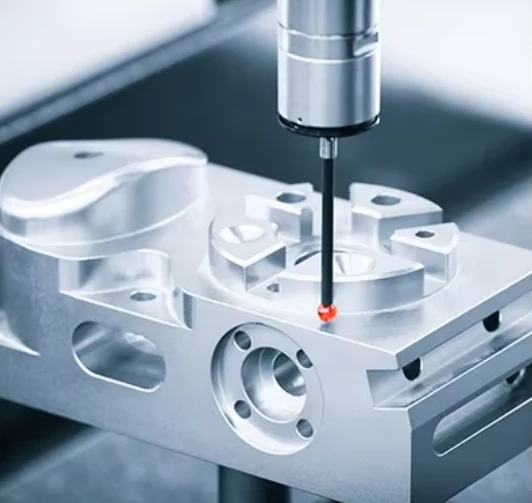
Part suitability depends on geometry, material, quality requirements and expected volume.
POM, PA, glass-filled nylon, PC, ABS, PP, TPU and other engineering resins may be compared according to function and environment.
Material and geometry should match static, impact and fatigue conditions.
POM, PA and reinforced materials may require attention to shrinkage and mold wear.
Temperature, chemicals, moisture and outdoor exposure affect material direction.
Replacement, assembly and maintenance needs may influence inserts, fasteners and tolerances.
Industrial components are often judged by function over appearance. The RFQ should explain how the part is loaded, assembled, maintained and exposed during use.
Static load, impact, fatigue, sliding contact and fastener torque influence resin, geometry and insert decisions.
Temperature, oils, chemicals, UV, moisture and outdoor use should be compared with material data and validation needs.
Service access, replaceable inserts, wear features and production continuity may affect tooling and spare-part planning.
Sometimes, but load, creep, temperature, wear, tolerances and failure consequences must be evaluated before redesign.
POM, PA and reinforced materials may be considered, but speed, load, lubrication, moisture and dimensional requirements affect the choice.
Insert molding or post-installed inserts can be compared based on torque, pull-out, volume, automation and service requirements.
CNC machining, bridge tooling and production tooling can be compared according to quantity, design stability and required material.
Case examples are presented without disclosing confidential customer information.